
Declining Butterflies of Michigan
This page is a work in progress. I will be continuing to add butterflies as the season progresses. This information has been provided by the Xerces Society State of the Butterflies in the United States Report.
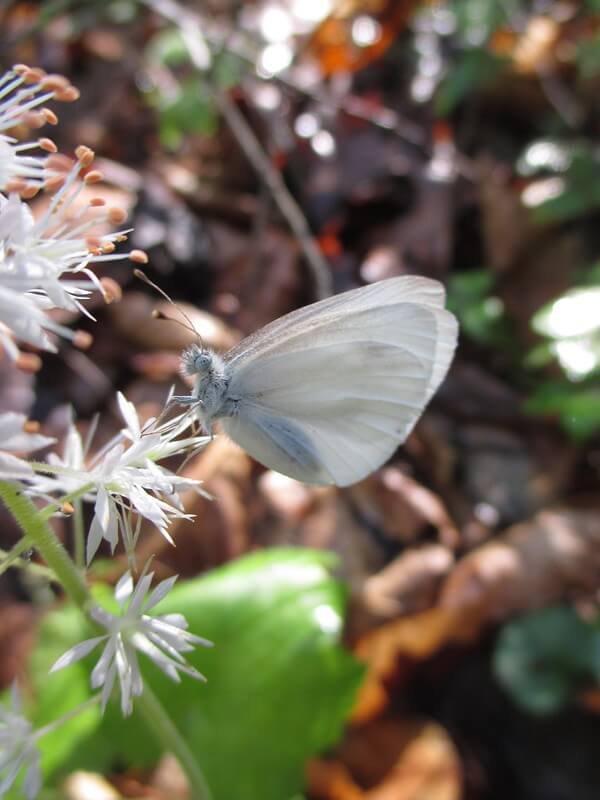
West Virginia White
Decline: 98.03%
-
Toothworts: Dentaria diphylla and Dentaria laciniata
-
Flower Nector
-
Description text goes here
-
Scientific name: Pieris virginiensis
Photo credit: Cathie Bird
Wagner, David L.Caterpillars of Eastern North America. Princeton University Press, 2005.
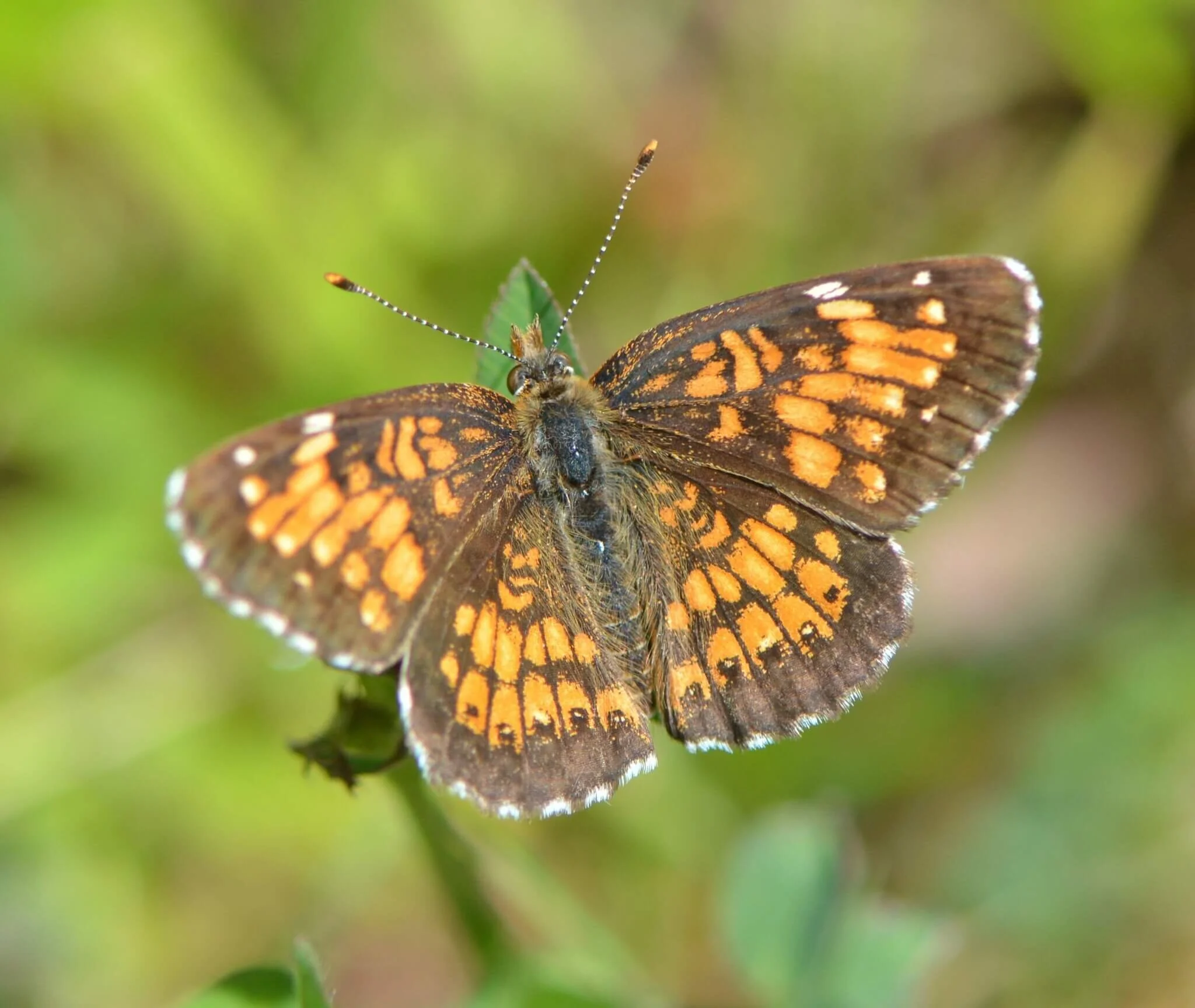
Harris’ Checkerspot
Decline: 92.92%
-
Flat-topped asters (Doellingeria spp.)
Goldenrod (Solidago)
Wingstem (Verbesina)
Asters (Symphyotrichum spp.)
-
Flower Nector
-
Overwinter in communal silk shelters in leaf litter
-
Scientific name: Chlosyne harrisii
Photo credit: Bex Goreham
Wagner, David L.Caterpillars of Eastern North America. Princeton University Press, 2005.
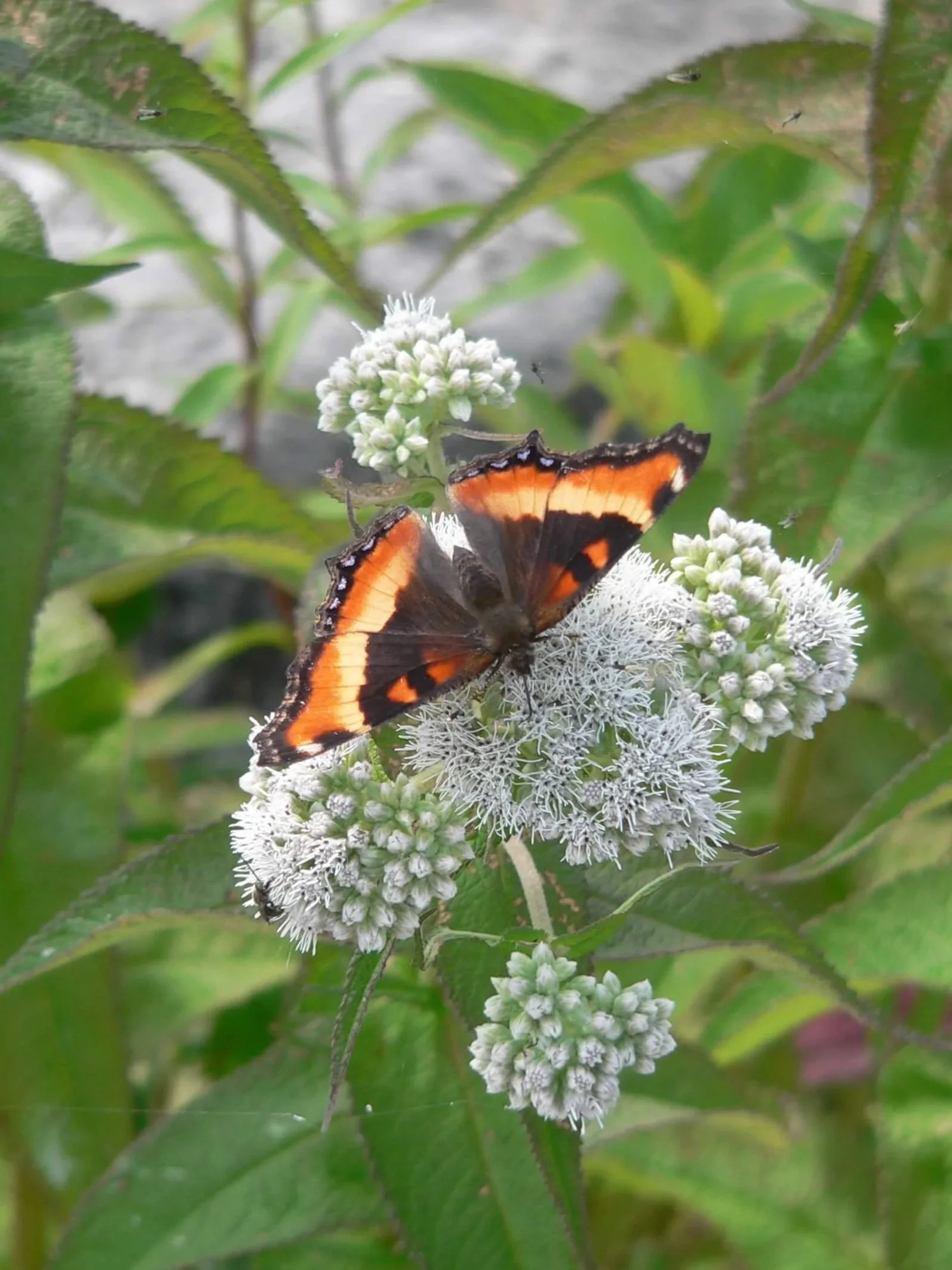
Milbert's Tortoiseshell
Decline: 92.24%
-
-
Adults nectar on a variety of flowers and also feed on sap, rotting fruit, and dung.
-
Adults overwinter in sheltered places such as tree cavities, rock crevices, or buildings
-
Scientific name: Nymphalis milberti
Photo credit: Jennifer Aitkens, CC BY 2.0 <https://creativecommons.org/licenses/by/2.0>, via Wikimedia Commons
Glassberg, Jeffrey.A Swift Guide to Butterflies of North America. Princeton University Press, 2017.
Wagner, David L.Caterpillars of Eastern North America. Princeton University Press, 2005.
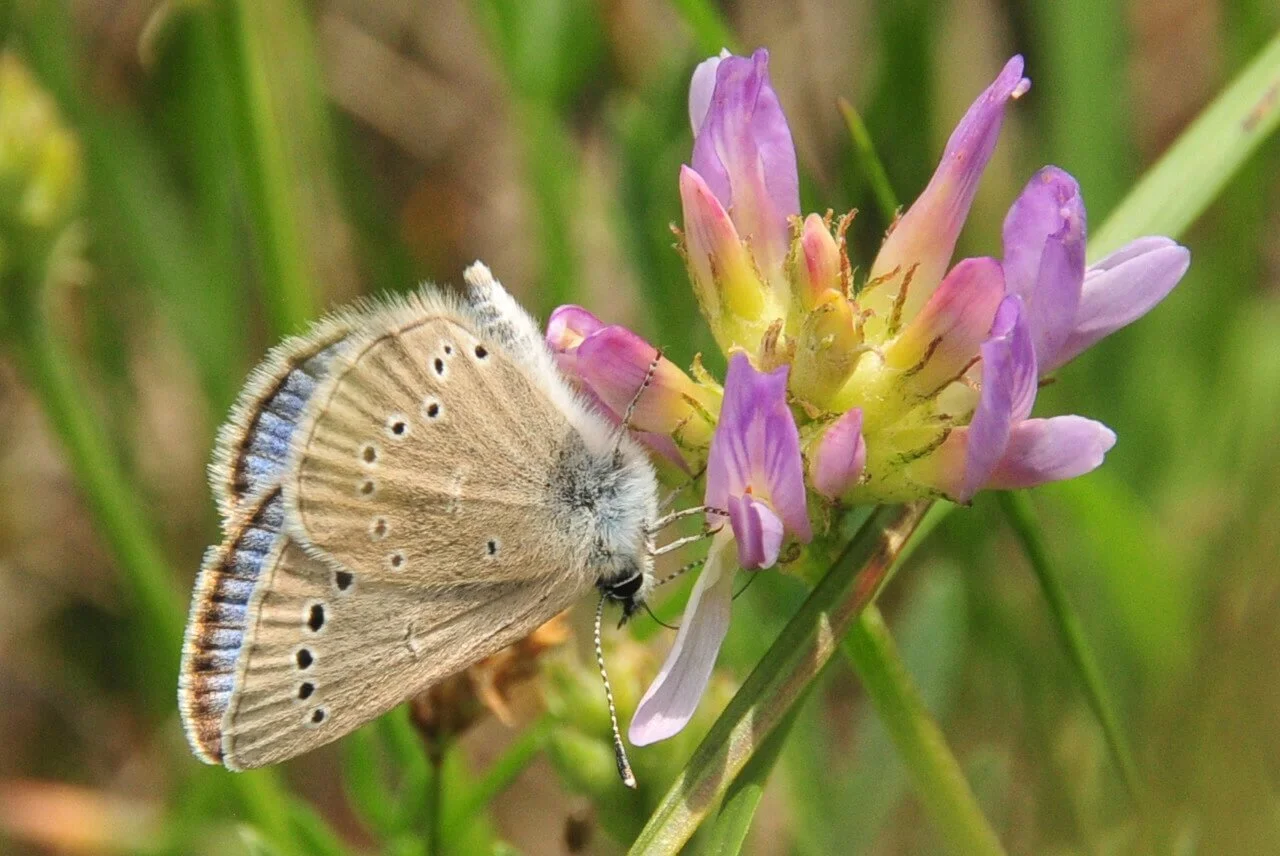
Silvery Blue
Decline: 91.37%
-
Caterpillars feed primarily on legumes (Fabaceae), including:
Canada Milk Vetch (Astragalus canadensis)
Wild lupine (Lupinus perennis)
Vetches (Vicia spp.)
Clovers (Trifolium spp.)
Other native and naturalized legumes
-
Adults nectar on a variety of spring-blooming wildflowers, especially legumes. As with many Lycaenids, caterpillars may have mutualistic relationships with ants, which protect them in exchange for sugary secretions (Wagner 2005).
-
Pupae overwinter in leaf litter or soil.
-
Scientific name: Glaucopsyche lygdamus
Photo credit: USFWS Mountain-Prairie, Public domain, via Wikimedia Commons
Glassberg, Jeffrey.A Swift Guide to Butterflies of North America. Princeton University Press, 2017.
Wagner, David L.Caterpillars of Eastern North America. Princeton University Press, 2005.
Illinois Wildflowers – host plant and ecological interactions.
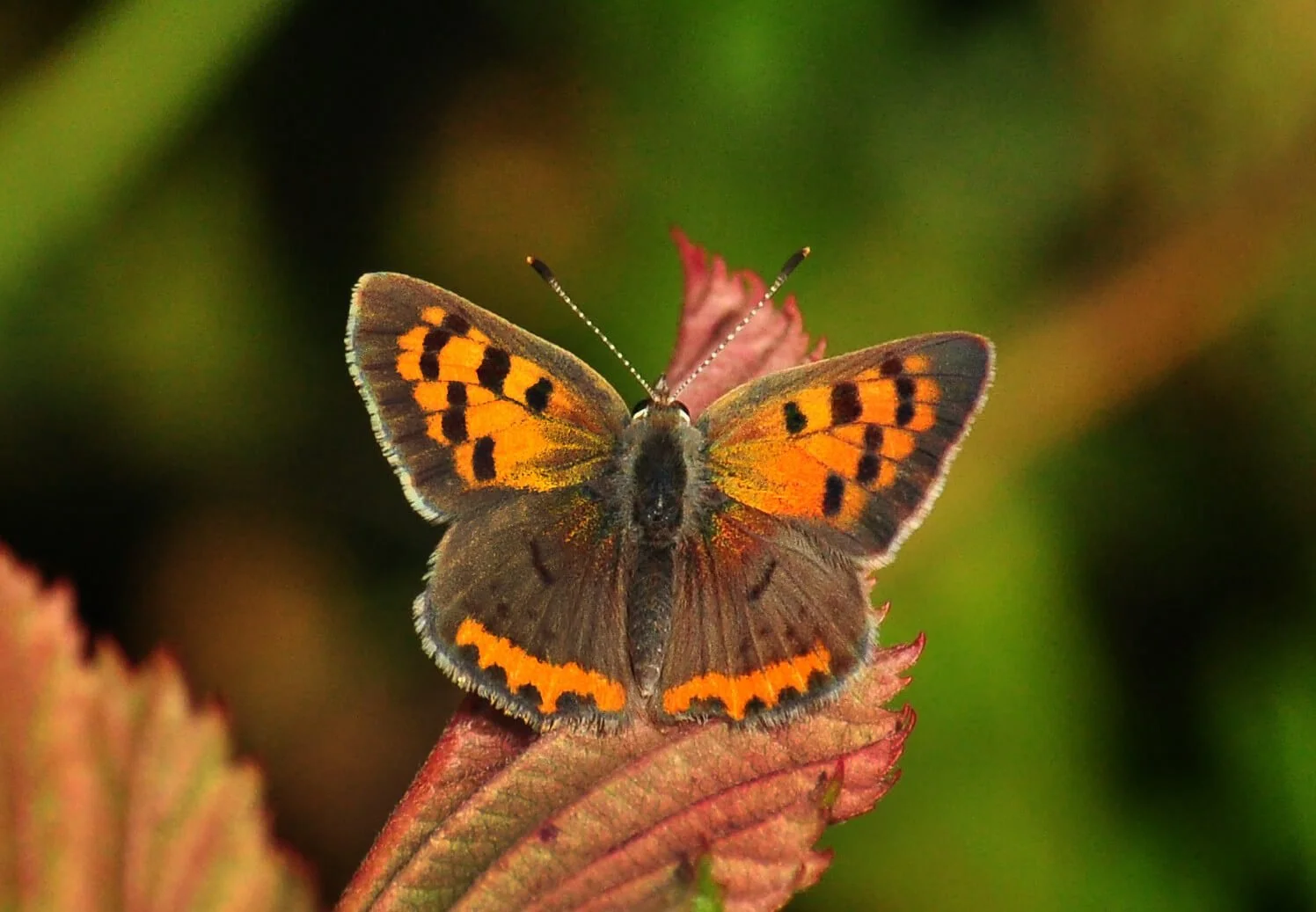
American Copper
Decline: 86.86%
-
Sheep sorrel (Rumex acetosella)
Curly dock (Rumex crispus)
Other dock species (Rumex spp.)
-
Adults nectar on a variety of low-growing flowers.
-
-
Scientific name: Lycaena phlaeas
Photo credit: John Blair
Glassberg, Jeffrey.A Swift Guide to Butterflies of North America. Princeton University Press, 2017.
Illinois Wildflowers – host plant and ecological interactions.
Wagner, David L.Caterpillars of Eastern North America. Princeton University Press, 2005.
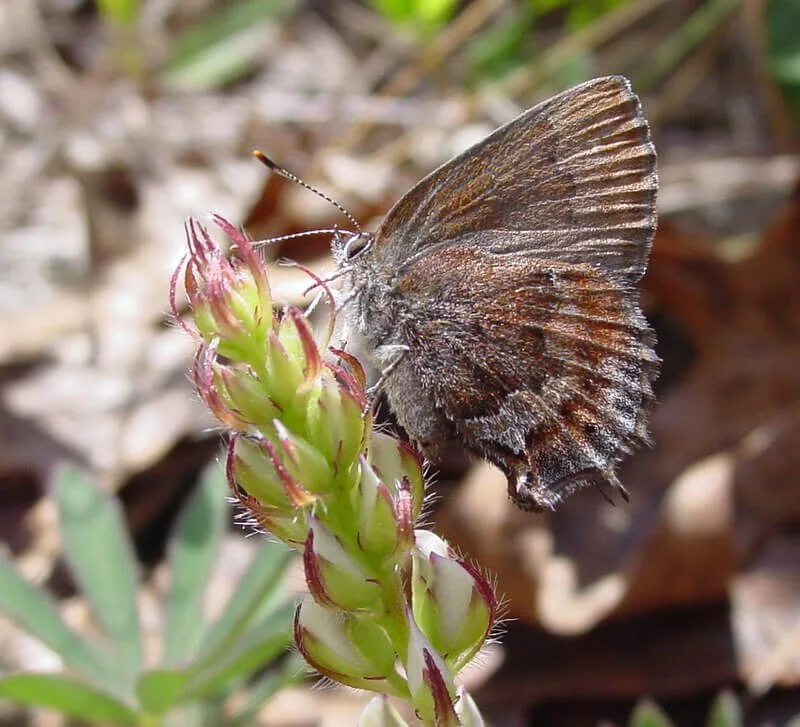
Frosted Elfin
Decline: 85.52%
-
Caterpillars feed on legumes (Fabaceae), especially:
Wild lupine (Lupinus perennis)
Wild indigo (Baptisia spp.)
Pine (Pinus)
-
Adults nectar on a variety of spring wildflowers. Their presence is often an indicator of high-quality, intact native ecosystems, particularly fire-maintained oak barrens and prairies (Wagner 2005; MNFI).
-
Pupae overwinter in leaf litter or soil near host plants
-
Scientific name: Callophrys irus
Photo credit: pondhawk from Winter Park, Florida, USA, CC BY 2.0 <https://creativecommons.org/licenses/by/2.0>, via Wikimedia Commons
Glassberg, Jeffrey. A Swift Guide to Butterflies of North America. Princeton University Press, 2017.
Wagner, David L.Caterpillars of Eastern North America. Princeton University Press, 2005.
Illinois Wildflowers – host plant and ecological interactions.
Michigan Natural Features Inventory (MNFI) – conservation status and habitat associations.
National Wildlife Federation Native Plant Finder – host plant relationships.
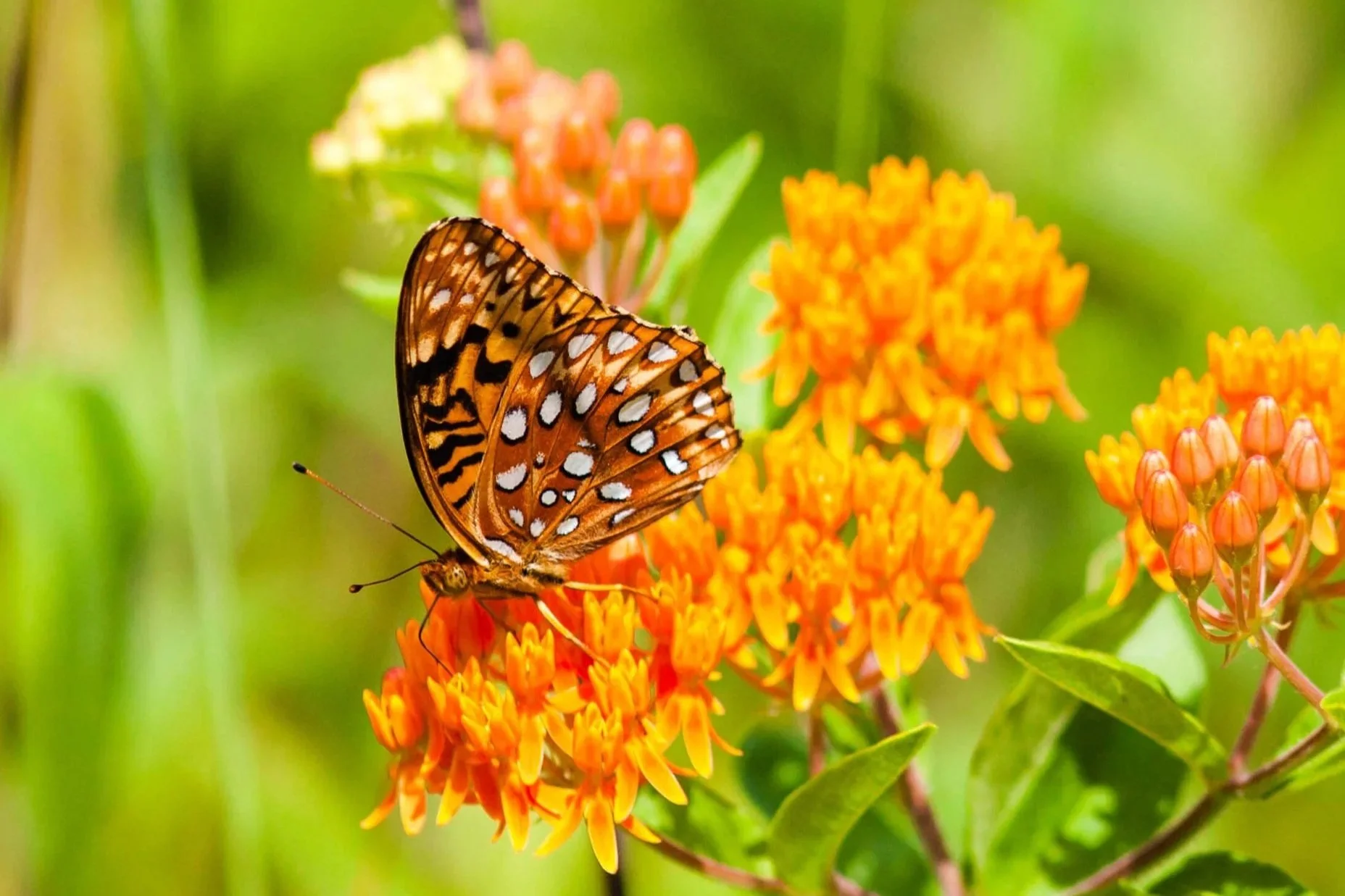
Aphrodite Fritillary
Decline: 85.36%
-
Caterpillars feed exclusively on violets (Viola spp.), including:
Common blue violet (Viola sororia)
Bird’s-foot violet (Viola pedata)
Downy Yellow Violet (Viola pubescens)
Prairie Violet (Viola pedatifida)
Other native violet species
Females lay eggs near (but not directly on) violets, and newly hatched larvae must locate host plants on their own (Wagner 2005; Illinois Wildflowers).
-
Adults are frequent visitors to nectar-rich flowers, especially summer-blooming natives like milkweeds, coneflowers, and thistles
-
First-instar larvae overwinter in leaf litter without feeding, resuming activity in spring (Wagner 2005).
-
Scientific name: Speyeria aphrodite
Photo credit: Melissa McMasters from Memphis, TN, United States, CC BY 2.0 <https://creativecommons.org/licenses/by/2.0>, via Wikimedia Commons
Glassberg, Jeffrey.A Swift Guide to Butterflies of North America. Princeton University Press, 2017.
Illinois Wildflowers – host plant and ecological interactions.
Wagner, David L.Caterpillars of Eastern North America. Princeton University Press, 2005.
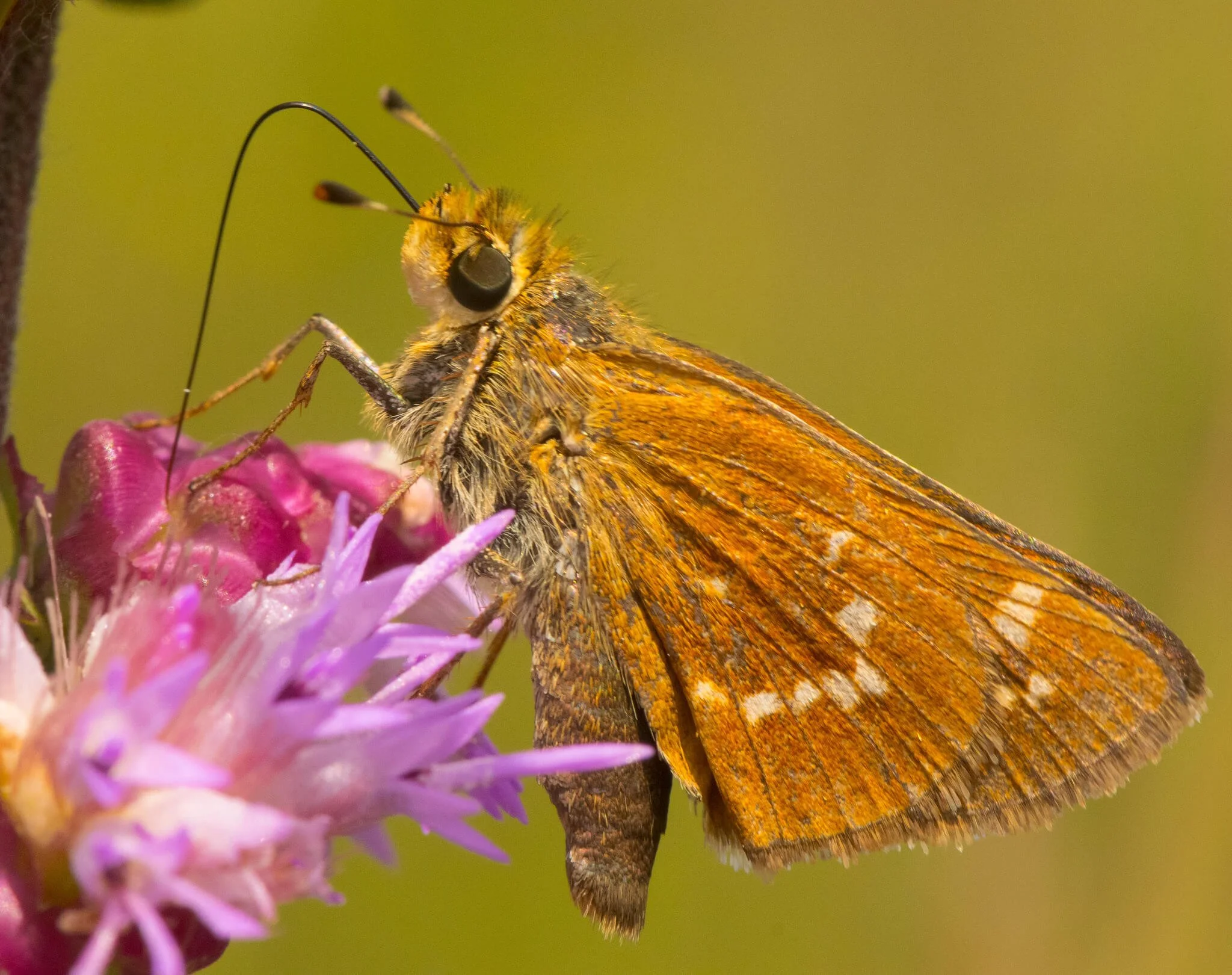
Leonard’s Skipper
Decline: 84.18%
-
Caterpillars feed on native grasses (Poaceae), especially:
Blue Grama Grass (Bouteloua gracilis)
Little bluestem (Schizachyrium scoparium)
Big bluestem (Andropogon gerardii)
Hairy Panic Grass (Panicum acuminatum)
Prairie Dropseed (Sporobolus heterolepis)
Side-Oats Grama (Bouteloua curtipendula)
Larvae create shelters by tying grass blades together and feed within these protected structures (Wagner 2005; Illinois Wildflowers).
-
Adults nectar on late-season wildflowers, especially asters, goldenrods, and blazing stars.
-
Caterpillars overwinter in grass shelters.
-
Scientific name: Hesperia leonardus
Photo credit: Joshua Mayer
Glassberg, Jeffrey. A Swift Guide to Butterflies of North America. Princeton University Press, 2017.
Wagner, David L.Caterpillars of Eastern North America. Princeton University Press, 2005.
Illinois Wildflowers – host plant and ecological interactions.
National Wildlife Federation Native Plant Finder – host plant relationships.
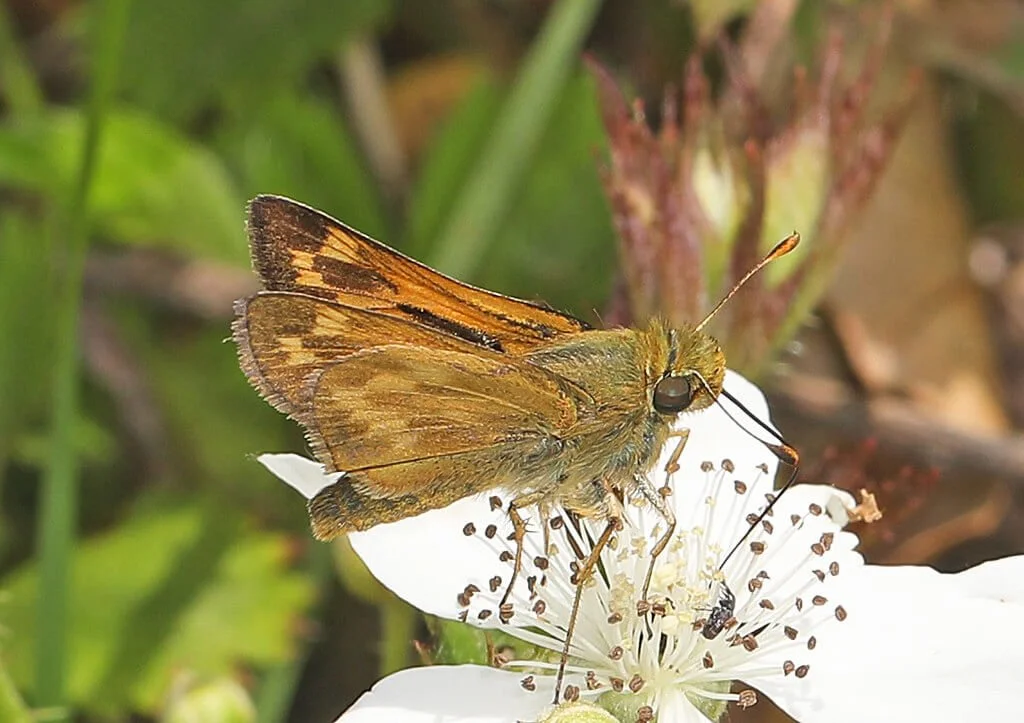
Indian Skipper
Decline: 83.78%
-
Caterpillars feed on grasses (Poaceae), particularly:
Little bluestem (Schizachyrium scoparium)
Hairy Panic Grass (Panicum acuminatum)
Red Fescue (Festuca rubra)
Other native warm-season grasses
Larvae construct shelters by folding or tying grass blades together and feed from within these structures (Wagner 2005; Illinois Wildflowers).
-
Adults nectar on a wide range of late-season wildflowers, including asters, goldenrods, and thistles.
-
Caterpillars overwinter in grass shelters.
-
Scientific name: Hesperia sassacus
Photo credit: Judy Gallagher
Glassberg, Jeffrey.A Swift Guide to Butterflies of North America. Princeton University Press, 2017.
Illinois Wildflowers – host plant and ecological interactions.
Wagner, David L.Caterpillars of Eastern North America. Princeton University Press, 2005.
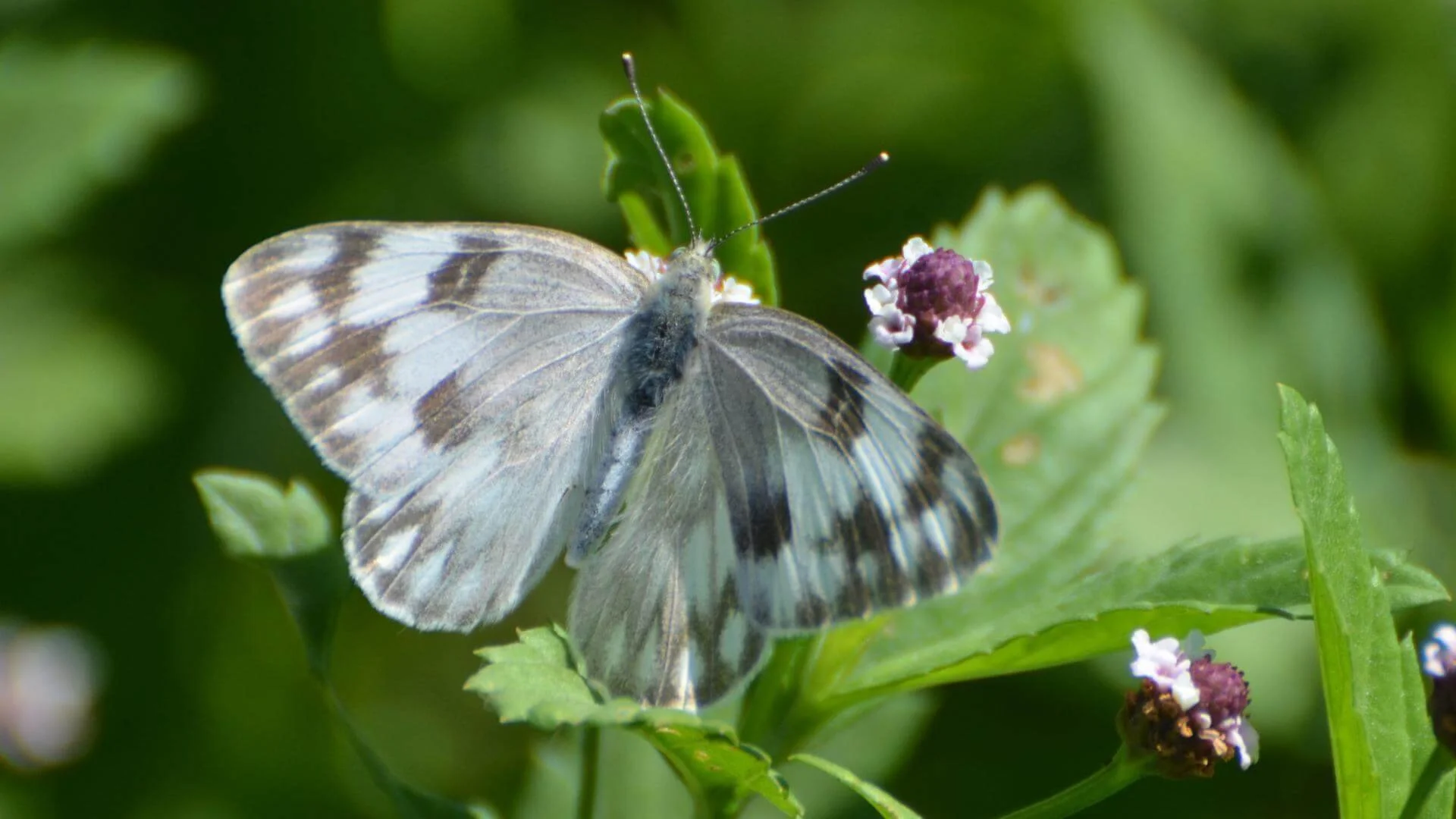
Checkered White
Decline: 83.50%
-
Caterpillars feed on plants in the mustard family (Brassicaceae), including:
Field mustard (Brassica spp.)
Peppergrass (Lepidium spp.)
Other native and non-native mustards
Larvae feed on leaves, flowers, and seed pods of host plants (Wagner 2005; Illinois Wildflowers).
-
Adults nectar on a variety of flowering plants, especially those in open, sunny habitats (Glassberg 2017).
-
Pupae overwinter.
-
Scientific name: Pontia protodice
Photo credit: Wildreturn, CC BY 2.0 <https://creativecommons.org/licenses/by/2.0>, via Wikimedia Commons
Glassberg, Jeffrey. A Swift Guide to Butterflies of North America. Princeton University Press, 2017.
Wagner, David L.Caterpillars of Eastern North America. Princeton University Press, 2005.
Illinois Wildflowers – host plant and ecological interactions.
National Wildlife Federation Native Plant Finder – host plant relationships.
Tawny Crescent
Decline: 83.47%
-
Flat-Topped Aster (Doellingeria umbellata)
Wavy-leaved aster (Aster undulatus) Not a Michigan native
Early instar larvae often feed gregariously, forming small groups on host plants before dispersing as they mature (Wagner 2005; Illinois Wildflowers).
-
Adults nectar on flowers.
-
Caterpillars overwinter in leaf litter.
-
Scientific name: Phyciodes batesii
Photo credit: Judy Gallagher
Glassberg, Jeffrey.A Swift Guide to Butterflies of North America. Princeton University Press, 2017.
Illinois Wildflowers – host plant and ecological interactions.
Wagner, David L.Caterpillars of Eastern North America. Princeton University Press, 2005.
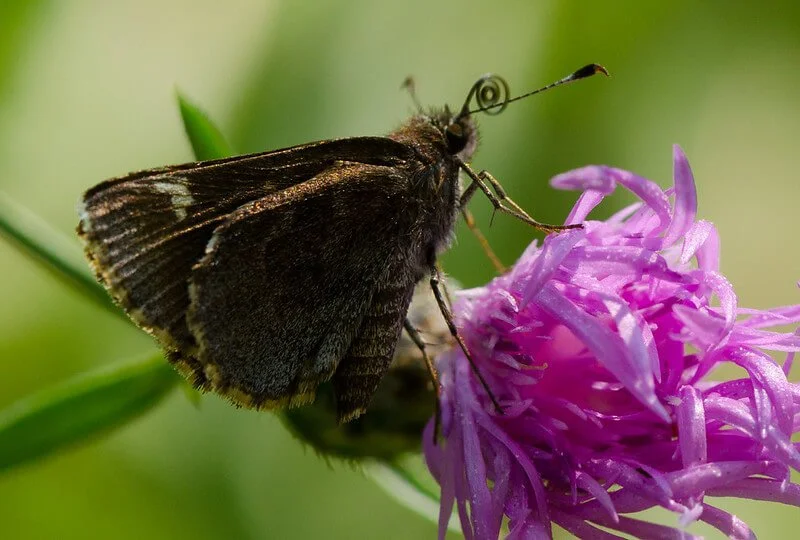
Common Roadside Skipper
Decline: 80.48%
-
Caterpillars feed on native grasses (Poaceae), particularly:
Big Bluestem (Andropogon gerardii)
Bromus spp.
Woodland grasses such as Panicum spp.
Other shade-tolerant native grasses
Larvae construct shelters by folding or tying grass blades together and feed from within these structures (Wagner 2005; Illinois Wildflowers).
-
Adults nectar on a variety of low-growing flowers and woodland-edge species. As with other skippers, larvae play an important role in food webs, supporting birds and other predators (Wagner 2005).
-
Caterpillars overwinter in grass shelters.
-
Scientific name: Amblyscirtes vialis
Photo credit: Joshua Mayer
Glassberg, Jeffrey. A Swift Guide to Butterflies of North America. Princeton University Press, 2017.
Wagner, David L.Caterpillars of Eastern North America. Princeton University Press, 2005.
Illinois Wildflowers – host plant and ecological interactions.
National Wildlife Federation Native Plant Finder – host plant relationships.
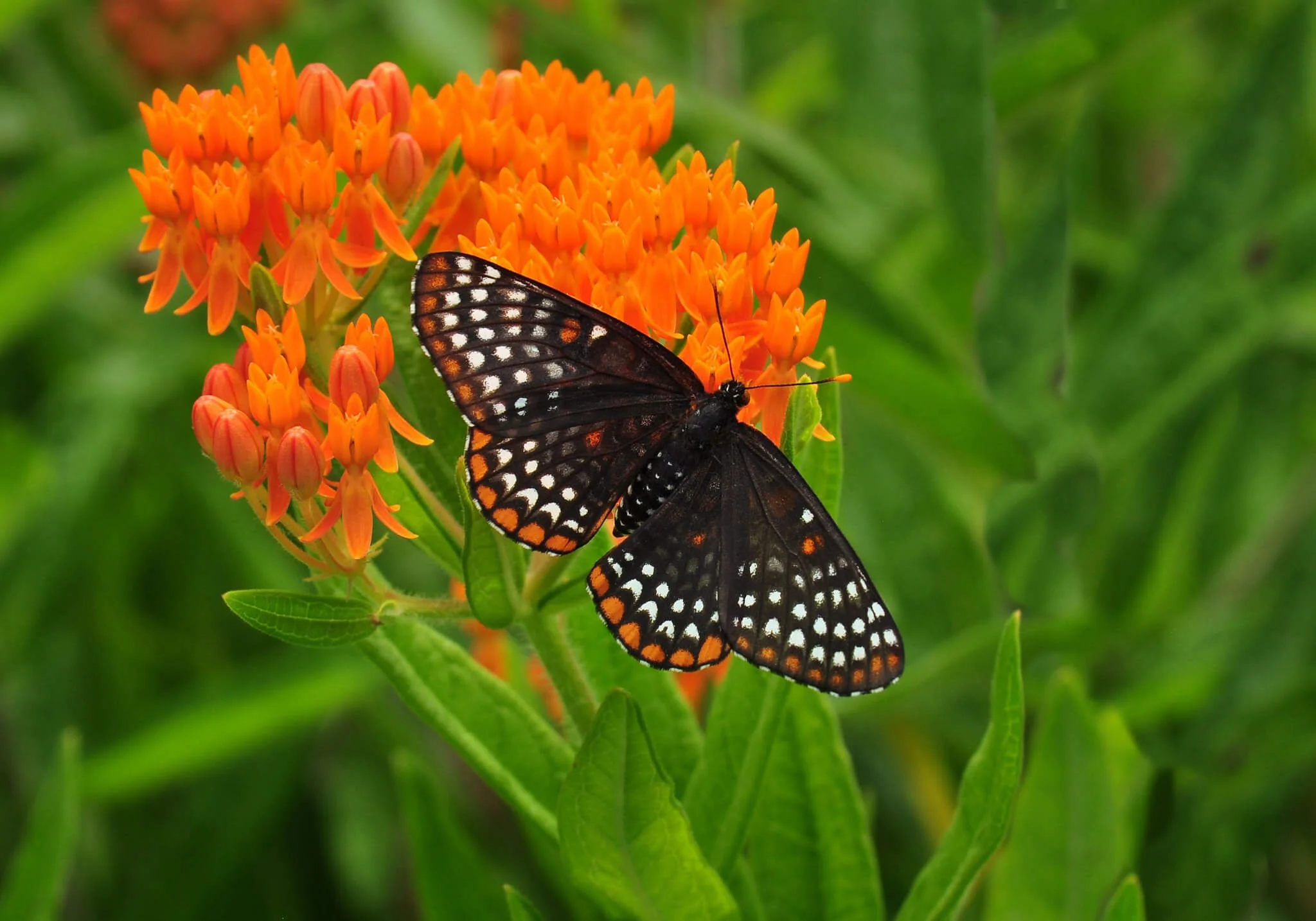
Baltimore Checkerspot
Decline: 79.76%
-
Hairy Beardtongue (Penstemon hirsutus)
Honeysuckle (Lonicera spp.)
Viburnum spp.
Maple-Leaved Viburnum (Viburnum acerifolium)
Highbush Cranberry (Viburnum trilobum)
White Ash (Fraxinus americana)
Wood-Betony (Pedicularis canadensis)
Yellow False Foxglove (Aureolaria spp.)
Early instar larvae feed gregariously, often forming visible groups on turtlehead plants (Wagner 2005; Illinois Wildflowers).
-
Adults nectar on flowers.
-
Caterpillars overwinter in communal silk webs in leaf litter
-
Scientific name: Euphydryas phaeton
Photo credit: John Blair
Glassberg, Jeffrey.A Swift Guide to Butterflies of North America. Princeton University Press, 2017.
Illinois Wildflowers – host plant and ecological interactions.
Wagner, David L.Caterpillars of Eastern North America. Princeton University Press, 2005.
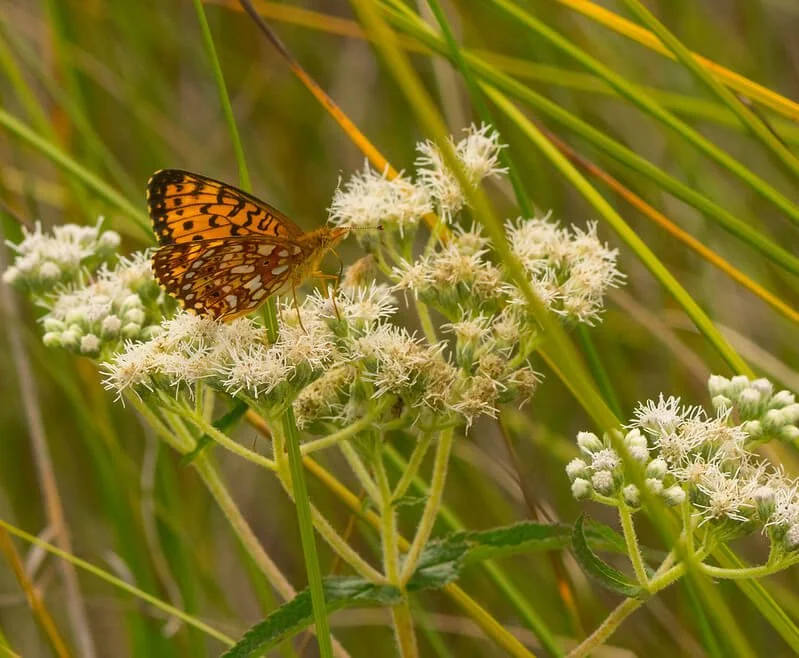
Silver-Bordered Fritillary
Decline: 77.75%
-
Caterpillars feed on members of the violet family (Viola spp.), including:
Arrowleaf violet (Viola sagittata)
Birdfoot violet (Viola pedata)
Canadian white violet (Viola canadensis)
Common blue violet (Viola sororia)
Downy yellow violet (Viola pubescens)
Longspur violet (Viola rostrata) )
Prairie Violet (Viola pedatifida)
-
Adults nectar on a variety of flowers in wet meadows and marsh edges, contributing to pollination (Glassberg 2017).
-
First-instar larvae overwinter in leaf litter without feeding (Wagner 2005).
-
Scientific name: Boloria selene
Photo credit: Joshua Mayer
Glassberg, Jeffrey. A Swift Guide to Butterflies of North America. Princeton University Press, 2017.
Wagner, David L.Caterpillars of Eastern North America. Princeton University Press, 2005.
Illinois Wildflowers – host plant and ecological interactions.
National Wildlife Federation Native Plant Finder – host plant relationships.
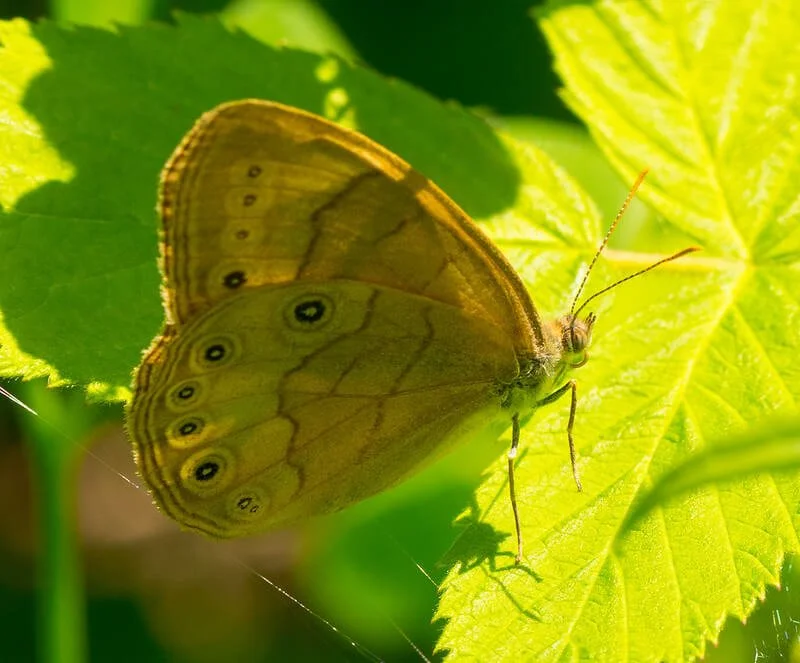
Eyed Brown
Decline: 76.54%
-
Caterpillars feed on Carex spp and Scirpus spp, particularly.
Sedges (Carex spp.), including:
Gray’s Sedge (Carex grayi)
Palm Sedge (Carex muskingumensis)
Long-Awned Bracted Sedge (Carex gravida)
Brown Fox Sedge (Carex vulpinoidea)
Ivory Sedge (Carex eburnea)
Common Cattail Sedge (Carex typhina)
Scirpus spp, including:
Bulrush (Scirpus pendulus)
Wool-grass (Scirpus cyperinus)
These plants are essential for larval development and are closely tied to the species’ wetland habitat requirements (Wagner 2005; Illinois Wildflowers).
-
Adults typically feed on sap, decaying organic matter, and bird droppings rather than flowers, though they may occasionally nectar. As a grass-feeding species, its larvae play an important role in transferring energy from plant material into the broader food web (Wagner 2005) (butterfliesandmoths.org)
-
Caterpillars overwinter among grasses and sedges.
-
Scientific name: Satyrodes eurydice
Photo credit: Joshua Mayer
Glassberg, Jeffrey.A Swift Guide to Butterflies of North America. Princeton University Press, 2017.
Illinois Wildflowers – host plant and ecological interactions.
Wagner, David L.Caterpillars of Eastern North America. Princeton University Press, 2005.
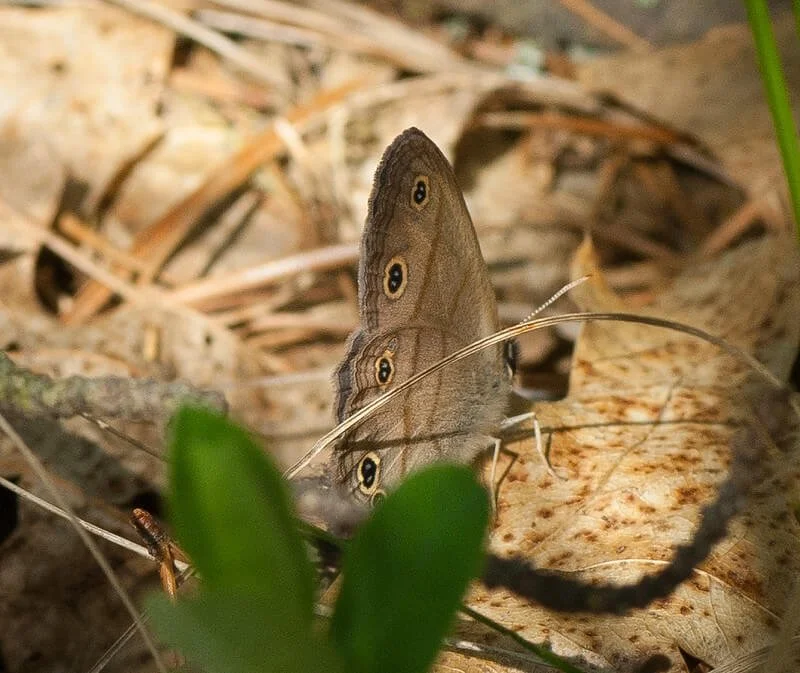
Common Wood-Nymph
Decline: 74.48%
-
Caterpillars feed on grasses (Poaceae), including:
Big Bluestem (Andropogon gerardii)
Little bluestem (Schizachyrium scoparium)
Other native prairie and woodland-edge grasses
Larvae feed low in the vegetation and are well-camouflaged (Wagner 2005; Illinois Wildflowers).
-
Adults typically feed on sap, rotting fruit, and other organic materials, though they may occasionally visit flowers. Their larvae feed on grasses, making them an important link between plant biomass and higher levels of the food web (Wagner 2005).
-
Caterpillars overwinter among grasses.
-
Scientific name: Cercyonis pegala
Photo credit: Joshua Mayer
Glassberg, Jeffrey. A Swift Guide to Butterflies of North America. Princeton University Press, 2017.
Wagner, David L.Caterpillars of Eastern North America. Princeton University Press, 2005.
Illinois Wildflowers – host plant and ecological interactions.
National Wildlife Federation Native Plant Finder – host plant relationships.