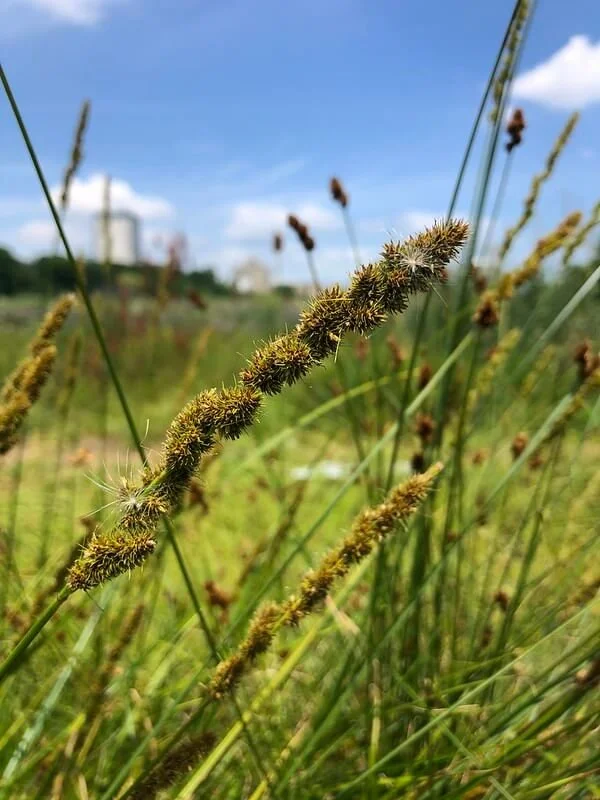
Brown Fox Sedge (Carex vulpinoidea)

from $3.50

Brown Fox Sedge is an attractive sedge. Collectively, the Carex species are an important food source to many kinds of insects and birds (illinoiswildflowers.info). Plus, it is likely the host plant for 28 species of butterflies and moths (Johnson and Colla, 2023), including the species of concern, Macoun's arctic (mnfi.anr.msu.edu). In preferred conditions, this robust sedge can spread vigorously, especially when there is minimal competition from other plants. Some wetland birds feed on the seeds or seedheads of sedges, including the Mallard and other ducks, Sora and Virginia Rail, Swamp Sparrow and other granivorous songbirds, Trumpeter Swan, and some sandpipers (Bird Table).  Brown Fox Sedge can form large colonies, which can provide good cover for many wetland animals, including nesting habitat for the Sedge Wren (illinoiswildflowers.info).

Photo credit: Aaron Volkening

Size:

Brown Fox Sedge is an attractive sedge. Collectively, the Carex species are an important food source to many kinds of insects and birds (illinoiswildflowers.info). Plus, it is likely the host plant for 28 species of butterflies and moths (Johnson and Colla, 2023), including the species of concern, Macoun's arctic (mnfi.anr.msu.edu). In preferred conditions, this robust sedge can spread vigorously, especially when there is minimal competition from other plants. Some wetland birds feed on the seeds or seedheads of sedges, including the Mallard and other ducks, Sora and Virginia Rail, Swamp Sparrow and other granivorous songbirds, Trumpeter Swan, and some sandpipers (Bird Table).  Brown Fox Sedge can form large colonies, which can provide good cover for many wetland animals, including nesting habitat for the Sedge Wren (illinoiswildflowers.info).

Photo credit: Aaron Volkening

Life Cycle: Perennial

Sun Exposure: Full-Partial shade

Soil Moisture: Wet – Med/dry

Height: 1.5-3 feet

Plant Spacing: 1-2 feet

Bloom Time: June-July

Advantages: Bird Favorite, Deer Resistant, Rain Garden, Caterpillar Favorite

Host Plant: 28 species of butterflies and moths use this as a caterpillar host plant in our area (Johnson and Colla, 2023)

Beneficial for Endangered or Threatened Species: Macoun's arctic (Oeneis macounii) (mnfi.anr.msu.edu)

Resource: Johnson, Lorraine, and Sheila Colla. A Northern Gardener’s Guide to Native Plants and Pollinators: Creating Habitat in the Northeast, Great Lakes, and Upper Midwest. Island Press, 2023