Riddell’s Goldenrod (Oligoneuron riddellii)

$5.50

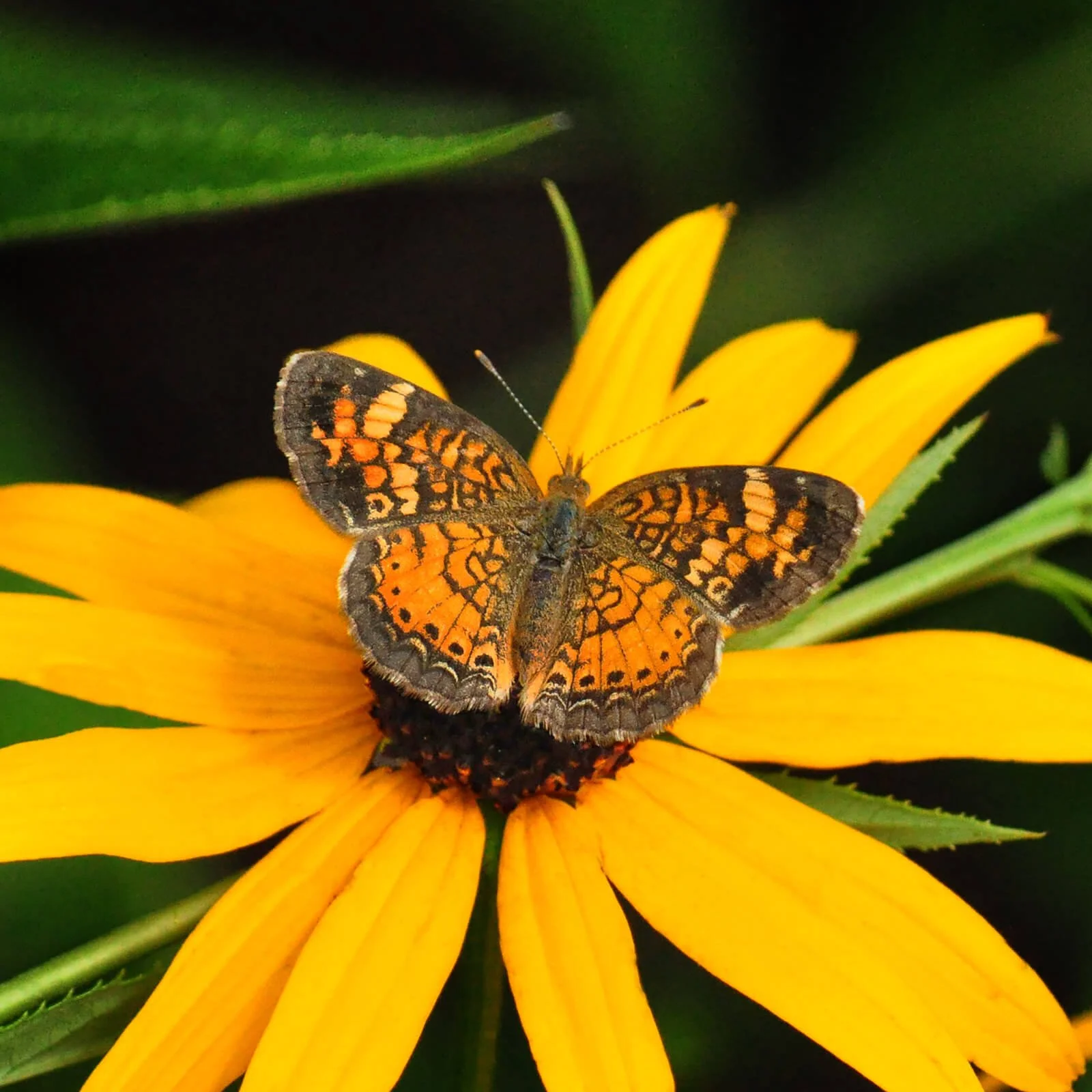
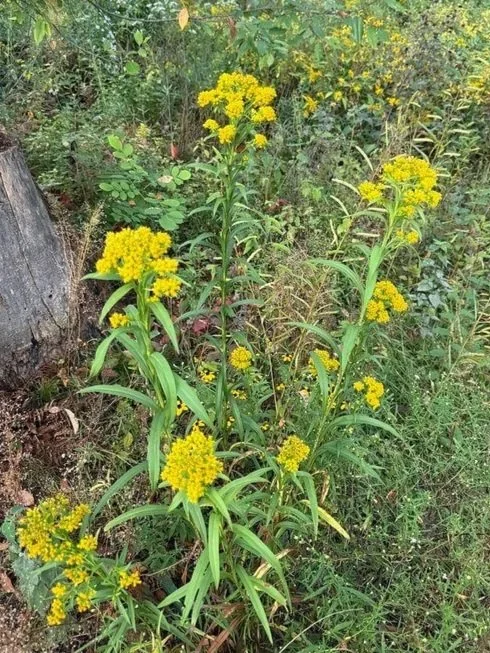
The flowers of Riddell’s Goldenrod attract many native bees and butterflies. Monarch butterflies are especially attracted to its flowers (illinoiswildflowers.info/). It is recommended as a monarch nectar source by Xerces Society (Xerces.org) as well as the host to an incredible 43 specialist bees (Johnson and Colla, 2023). Songbirds, such as the Eastern Goldfinch, Indigo Bunting, Slate-colored Junco, Swamp Sparrow, and Tree Sparrow, feed on the seeds (illinoiswildflower.info). It can be a prolific self-seeder, thus it may be prudent to remove seed heads before the seed is ripe, especially in small landscapes, but if you can leave them for the birds, that would be awesome. It has a fibrous root system, so it does not spread rapidly like some of the rhizomatous goldenrods. I cannot stress how important goldenrods (and other fall bloomers) are on the landscape. They provide food for important pollinators well into the fall when most other plant life is shutting down.

Photo credit: John Blair

The flowers of Riddell’s Goldenrod attract many native bees and butterflies. Monarch butterflies are especially attracted to its flowers (illinoiswildflowers.info/). It is recommended as a monarch nectar source by Xerces Society (Xerces.org) as well as the host to an incredible 43 specialist bees (Johnson and Colla, 2023). Songbirds, such as the Eastern Goldfinch, Indigo Bunting, Slate-colored Junco, Swamp Sparrow, and Tree Sparrow, feed on the seeds (illinoiswildflower.info). It can be a prolific self-seeder, thus it may be prudent to remove seed heads before the seed is ripe, especially in small landscapes, but if you can leave them for the birds, that would be awesome. It has a fibrous root system, so it does not spread rapidly like some of the rhizomatous goldenrods. I cannot stress how important goldenrods (and other fall bloomers) are on the landscape. They provide food for important pollinators well into the fall when most other plant life is shutting down.

Photo credit: John Blair

Life Cycle: Perennial

Sun Exposure: Full

Soil Moisture: Wet--Medium

Height: 1-3 feet

Plant Spacing: 1.5-2 feet

Bloom Time: August-October

Bloom Color: Yellow

Advantages: Pollinator Favorite, Bird Favorite, Deer Resistant

Host Plant: 2 species of butterflies and moths use this as a caterpillar host plant in our area (nwf.org)

Specialist Bee: Andrena aliciae, A. apacheorum, A. asteris, A. braccata, A. canadensis, A. chromotricha, A. hirticincta, A. nubecula, A. placata, A. simplex, Perdita octomaculata, P. swenki, Pseudopanurgus aestivalis, P. andrenoides, P. compositarum, P. abrosiformis, P. solidaginis, Melissodes agilis, M. boltoniae, M. coloradensis, M. coreopsis, M. dentiventris, M. druriellus, M. fumosus, M. illatus, M. menuachus, M. microstictus, M. niveus, M. trinodis, M.  wheeleri, Colletes americanus, C. compactus, C. rufocinctus, C. simulans, C. solidaginis, C. speculiferus, Dieunomia heteropoda, Dianthidium simile, Dufourea marginata, Megachile inimica, M. parallela, M. xylocopoides and Ashmeadiella bucconis (Johnson and Colla, 2023)

Resource: Johnson, Lorraine, and Sheila Colla. A Northern Gardener’s Guide to Native Plants and Pollinators: Creating Habitat in the Northeast, Great Lakes, and Upper Midwest. Island Press, 2023)