Purple Chokeberry (Aronia prunifolia)

$12.00

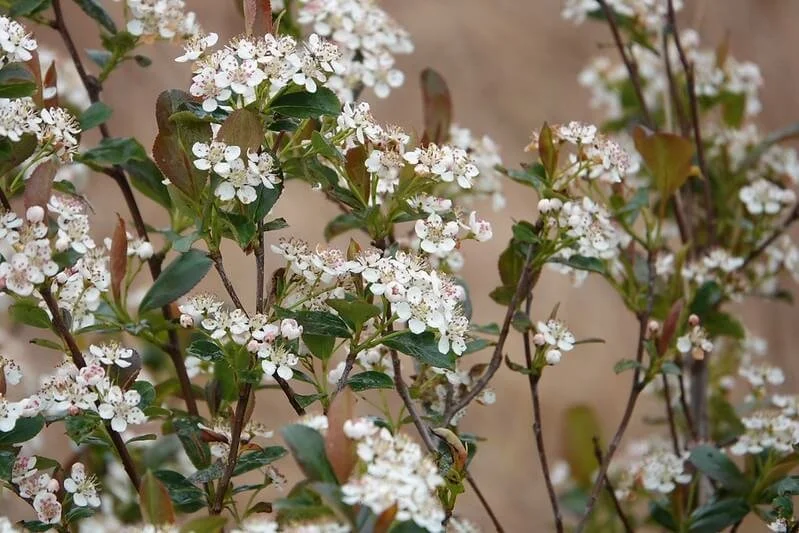
Purple Chokeberries provide high wildlife value to any garden. In early spring, the abundant flowers provide nectar and pollen to many of our native bees, including mason, miner, and bumblebees. It is a host plant to the Coral hairstreak and 2 other species of butterflies and moths (illinoiswildflower.info). The showy but astringent fruit persists well into winter and birds, such as the Ruffed Grouse and Cedar Waxwing, use Chokeberries as a food source and the berries are likely to be eaten by various mammals.

Photo credit: Gertjan van Noord

Purple Chokeberries provide high wildlife value to any garden. In early spring, the abundant flowers provide nectar and pollen to many of our native bees, including mason, miner, and bumblebees. It is a host plant to the Coral hairstreak and 2 other species of butterflies and moths (illinoiswildflower.info). The showy but astringent fruit persists well into winter and birds, such as the Ruffed Grouse and Cedar Waxwing, use Chokeberries as a food source and the berries are likely to be eaten by various mammals.

Photo credit: Gertjan van Noord

Life Cycle: Perennial

Sun Exposure: Full-Partial shade

Soil Moisture: Medium-wet, Medium, Medium-dry

Height: 3-8 feet

Plant Spacing: 3-5 feet

Bloom Time: Spring

Bloom Color: White

Advantages: Pollinator Favorite, Edible

Host Plant: Coral hairstreak and 2 other species of butterflies and moths may use this as a caterpillar host plant (illinoiswildflower.info)

Resource: Johnson, Lorraine, and Sheila Colla. A Northern Gardener’s Guide to Native Plants and Pollinators: Creating Habitat in the Northeast, Great Lakes, and Upper Midwest. Island Press, 2023)