Grass-Leaved Goldenrod (Euthamia graminifolia)

$5.00
In Production

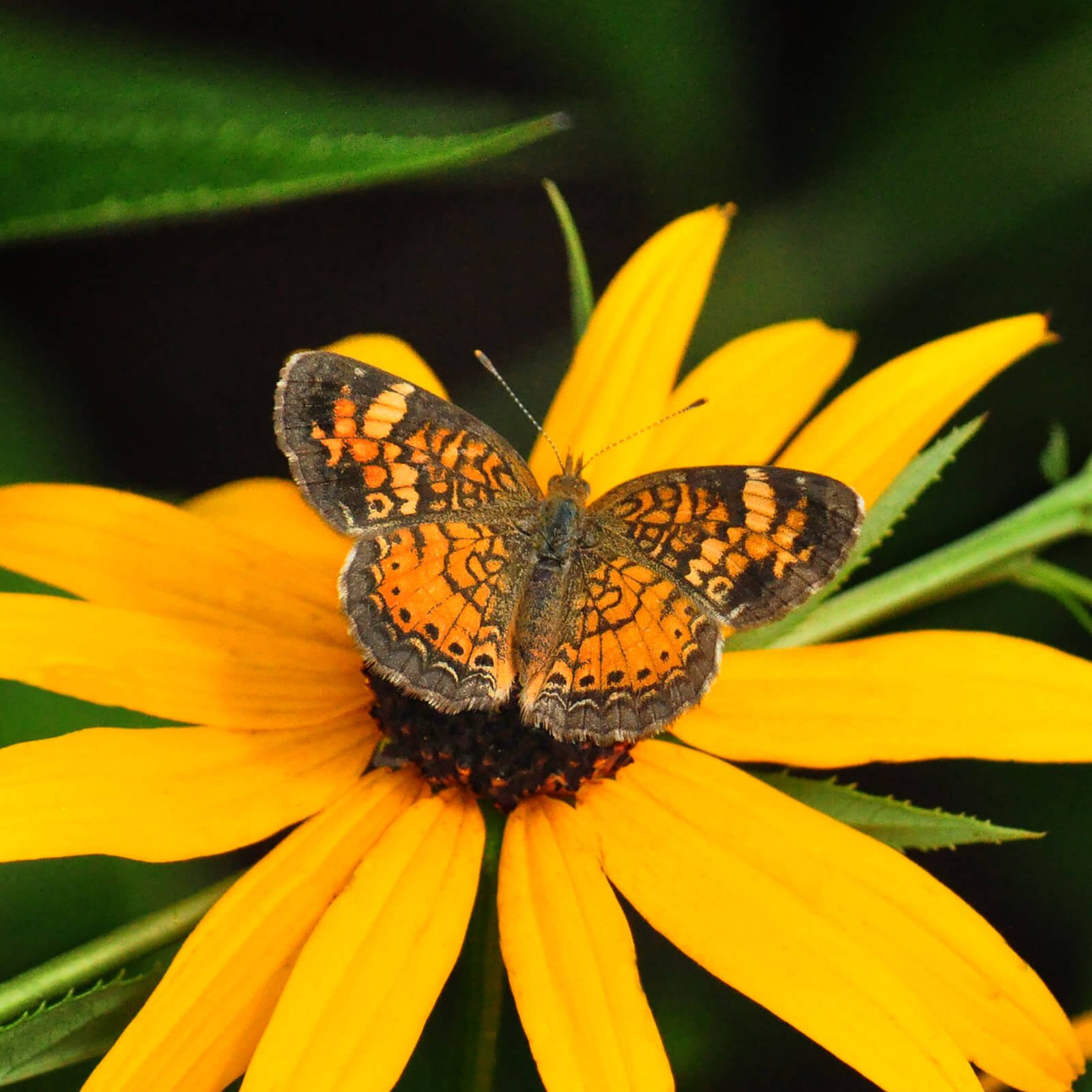
The small flowers of Grass-Leaved Goldenrod attract many different kinds of native bees, butterflies, and moths (illinoiswildflower.info). It is the host plant to 6 species of butterflies and moths in our area (nwf.org) and is also the host plant to 10 different specialist bees (Johnson and Colla, 2023). Grass-Leaved Goldenrod does spread by rhizomes and can be vigorous in certain situations, so choose the place your plant wisely.

Get notified by email when this product is in stock.

The small flowers of Grass-Leaved Goldenrod attract many different kinds of native bees, butterflies, and moths (illinoiswildflower.info). It is the host plant to 6 species of butterflies and moths in our area (nwf.org) and is also the host plant to 10 different specialist bees (Johnson and Colla, 2023). Grass-Leaved Goldenrod does spread by rhizomes and can be vigorous in certain situations, so choose the place your plant wisely.

Life Cycle: Perennial 

Sun Exposure: Full-Partial, but seems to prefer full sun

Soil Moisture: Wet, Medium-wet, Medium, Medium-dry

Height: 2-4 feet

Plant Spacing

Bloom Time: July-September

Bloom Color: Yellow

Advantages: Deer Resistant, Pollinator Favorite, Rain Garden, Recommended, but can be vigorous

Host: 6 species of butterflies and moths use this as a caterpillar host plant in our area (nwf.org)

Specialist Bee: Andrena braccata, A. nubecula, A. hirticincta, A. placata, A. simplex, Colletes americanus, C. simulans, C. speculiferus, Perdita octomaculata, and Melissodes druriellus (Johnson and Colla, 2023).

Resource: Johnson, Lorraine, and Sheila Colla. A Northern Gardener’s Guide to Native Plants and Pollinators: Creating Habitat in the Northeast, Great Lakes, and Upper Midwest. Island Press, 2023