Giant St. John’s Wort (Hypericum ascyron)

$5.00

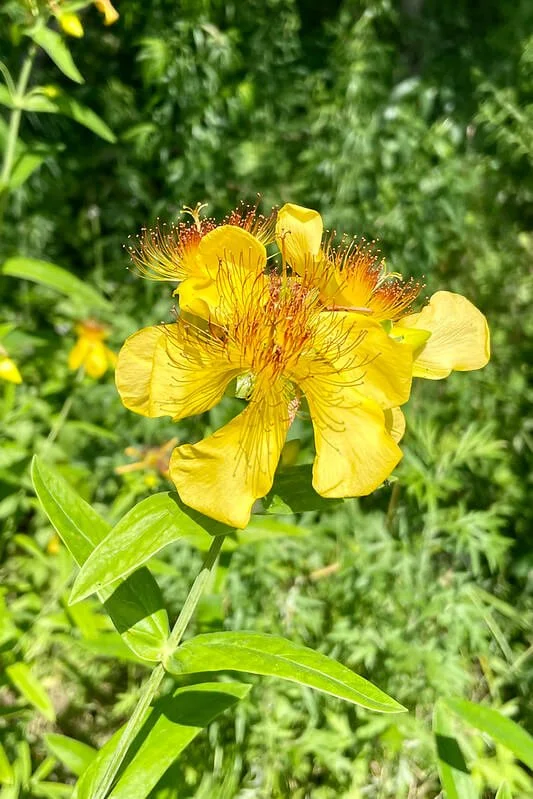
Giant St. John’s Wort has the largest flowers of the Hypericum spp. Those beauties attract a wide variety of native bees, especially bumblebees, which are their primary pollinators (illinoiswildflower.info). It is the host plant to the Gray Hairstreak and 22 other species of butterflies and moths in our area (nwf.org). The foliage seems to be somewhat toxic to mammalian herbivores and is thus avoided by deer and bunnies!

Photo credit: Alexey Yakovlev

Giant St. John’s Wort has the largest flowers of the Hypericum spp. Those beauties attract a wide variety of native bees, especially bumblebees, which are their primary pollinators (illinoiswildflower.info). It is the host plant to the Gray Hairstreak and 22 other species of butterflies and moths in our area (nwf.org). The foliage seems to be somewhat toxic to mammalian herbivores and is thus avoided by deer and bunnies!

Photo credit: Alexey Yakovlev

Life Cycle: Perennial

Sun Exposure: Full-Partial shade

Soil Moisture: Medium/wet – Dry

Height: 2-5 feet

Plant Spacing: 2-3 feet

Bloom Time: July-August

Bloom Color: Yellow

Advantages: Caterpillar Favorite, Pollinator Favorite, Deer Resistant, Great Landscape Plant

Host Plant: Gray Hairstreak and 22 species of butterflies and moths use this as a caterpillar host plant in our area (nwf.org)