Fire Pink (Silene virginica)

$5.00

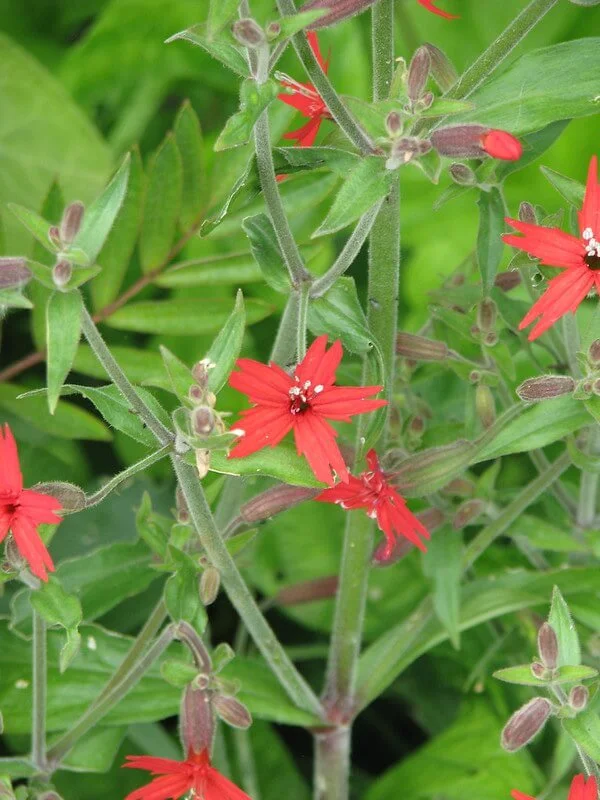
Fire Pinks are a delight in the garden. I could find little information about floral-faunal relationships, but the flowers are probably cross-pollinated by the Ruby-throated Hummingbird and various large butterflies (illinoisewildflower.info). It possibly serves as a host plant for six species of moths in our area (nwf.org). Fire Pink is considered endangered in Michigan, planting it in gardens and landscapes can play a meaningful role, not by restoring historic populations, but by providing essential habitat for the insects and wildlife that depend on it (mnfi.anr.msu.edu). The sticky hairs on the surface of the calyx discourage ants from climbing up the flower to steal nectar. A good choice for a dry, semi-shaded garden.

Photo Credit: Peganum

Fire Pinks are a delight in the garden. I could find little information about floral-faunal relationships, but the flowers are probably cross-pollinated by the Ruby-throated Hummingbird and various large butterflies (illinoisewildflower.info). It possibly serves as a host plant for six species of moths in our area (nwf.org). Fire Pink is considered endangered in Michigan, planting it in gardens and landscapes can play a meaningful role, not by restoring historic populations, but by providing essential habitat for the insects and wildlife that depend on it (mnfi.anr.msu.edu). The sticky hairs on the surface of the calyx discourage ants from climbing up the flower to steal nectar. A good choice for a dry, semi-shaded garden.

Photo Credit: Peganum

‍Life Cycle: Short-Lived Perennial

‍Sun Exposure: Partial shade

‍Soil Moisture: Medium/dry – Dry

‍Height: 1-2 feet

‍Plant Spacing: 1-2 feet

‍Bloom Time: May-July

‍Bloom Color: Red

‍Advantages: Bird Favorite, Great Landscaping Plant

‍Host Plant: 6 species of butterflies and moths use this as a caterpillar host plant in our area (nwf.org)

‍Species of Concern: State Status: Endangered (legally protected), State Rank: Critically Imperiled  (mnfi.anr.msu.edu)