Bishop’s Cap (Mitella diphylla)

$5.00
Out of Stock

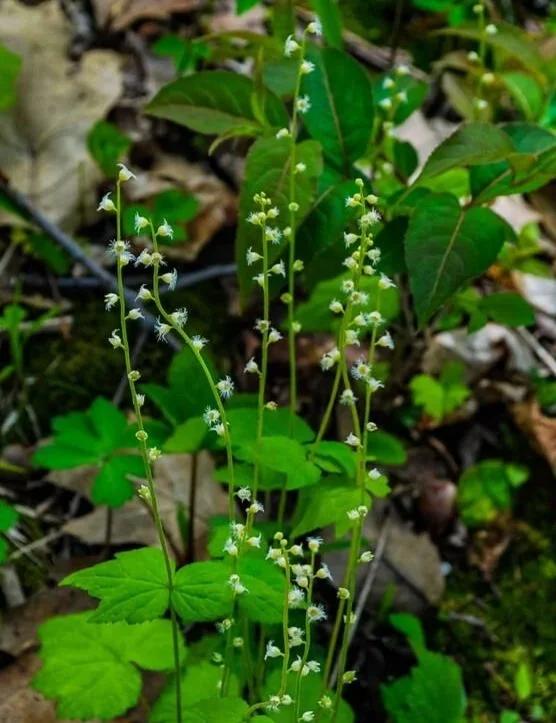
The small, fairy-like flowers of Bishop’s Cap are very attractive. They attract small, short-tongued native bees to collect pollen for their larvae. Little else appears to be known about its floral-faunal relationships. After blooming, the flowers are replaced by an open capsule that contains many small seeds. These seeds are distributed when raindrops strike the capsule, causing it to bend and fling its seeds. The root system can produce vegetative colonies from rhizomes (illinoiswildflower.info).

Photo credit: Joshua Mayer

Get notified by email when this product is in stock.

The small, fairy-like flowers of Bishop’s Cap are very attractive. They attract small, short-tongued native bees to collect pollen for their larvae. Little else appears to be known about its floral-faunal relationships. After blooming, the flowers are replaced by an open capsule that contains many small seeds. These seeds are distributed when raindrops strike the capsule, causing it to bend and fling its seeds. The root system can produce vegetative colonies from rhizomes (illinoiswildflower.info).

Photo credit: Joshua Mayer

Life Cycle: Perennial

Sun Exposure: Partial shade - Shade

Soil Moisture: Medium/wet – Medium/dry

Height: 8-12 inches

Plant Spacing: 6-12 inches

Bloom Time: April-June

Bloom Color: White

Advantages: Great Landscaping plant

Specialist Bee: Colletes aestivalis (Johnson and Colla, 2023)

Resource: Johnson, Lorraine, and Sheila Colla. A Northern Gardener’s Guide to Native Plants and Pollinators: Creating Habitat in the Northeast, Great Lakes, and Upper Midwest. Island Press, 2023