 Image 1 of 1
Life Cycle: Perennial
Sun Exposure: Full-Partial
Soil Moisture: Medium – Dry
Height: 1-3 feet
Plant Spacing: 1-2 feet
Bloom Time: August-October
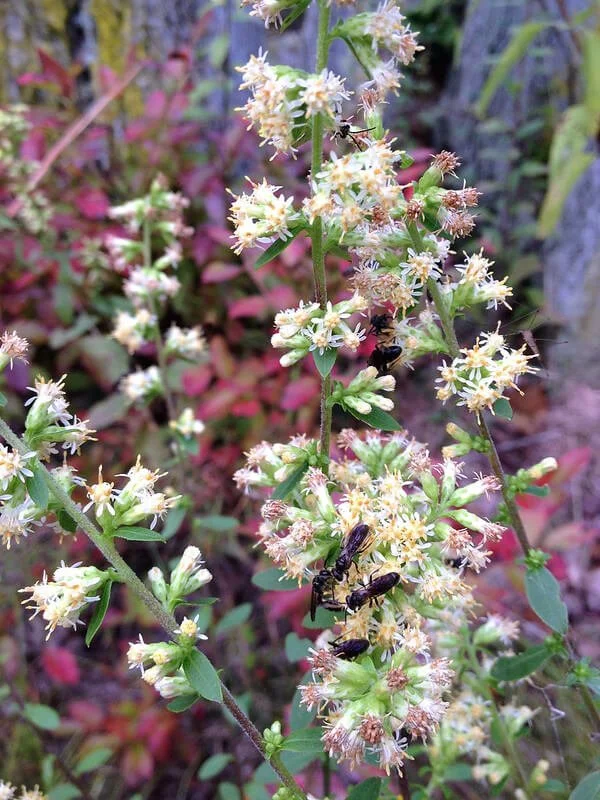
Bloom Color: White
Advantages: Caterpillar Favorite, Pollinator Favorite, Bird Favorite, Deer Resistant
Host Plant: 135 species of caterpillars and many moths use this as a host plant in our area (nwf.org)
Specialist Bee: Andrena aliciae, A. apacheorum, A. asteris, A. braccata, A. canadensis, A. Chromotricha, A. hirticincta, A. nubecula, A. placata, A. simplex, Perdita octomaculata, P. swenki, Pseudopanurgis aestivalis, P. andrenoides, P. compositarum, P. labrosiformis, P. solidaginis, Melissodes agilis, M. boltoniae, M. coloradensis, M. coreopsis, M. dentiventris, M. druriellus, M. fumosus, M. illatus, M. menuachus, M. microstictus, M. niveus, M. trinodis, M. wheeleri, Colletes americanus, C. compactus, C. rufocinctus, C. simulans, C. solidaginis, C. speculiferus, Dieunomia heteropoda, Dianthidium simile, Dufourea marginata, Megachile inimical, M. parallela, M. xylocopoides, and Ashmeadiella bucconis (Holm, 2017) (Johnson and Colla, 2023)
Species of Concern: State Status: Endangered (legally protected), State Rank: Critically imperiled (mnfi.anr.msu.edu)
Complementary Plants: NewEngland aster, Stiff goldenrod, Little bluestem grass
Resource: Holm, Heather. Bees: An Identification and Native Plant Forage Guide. Pollination Press LLC, 2017
Resource: Johnson, Lorraine, and Sheila Colla. A Northern Gardener’s Guide to Native Plants and Pollinators: Creating Habitat in the Northeast, Great Lakes, and Upper Midwest. Island Press, 2023